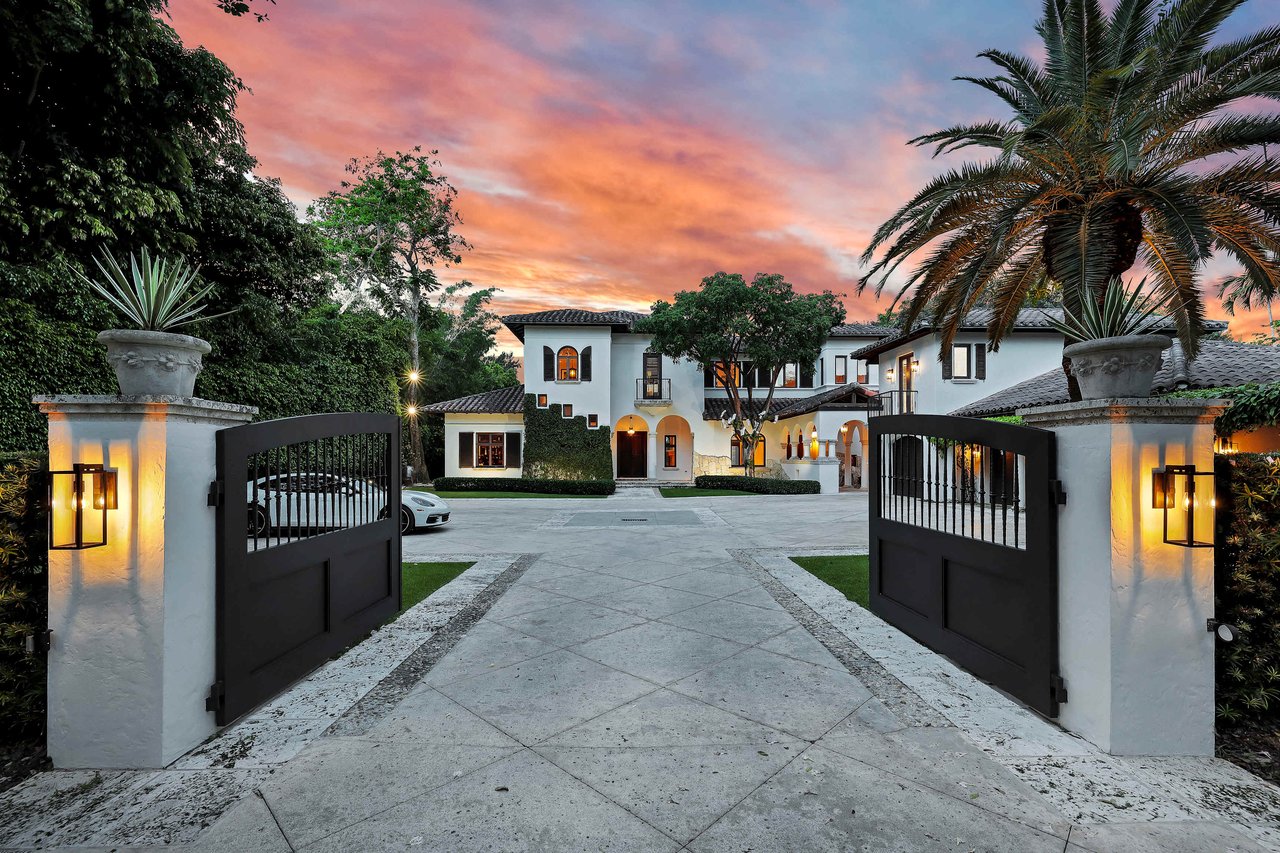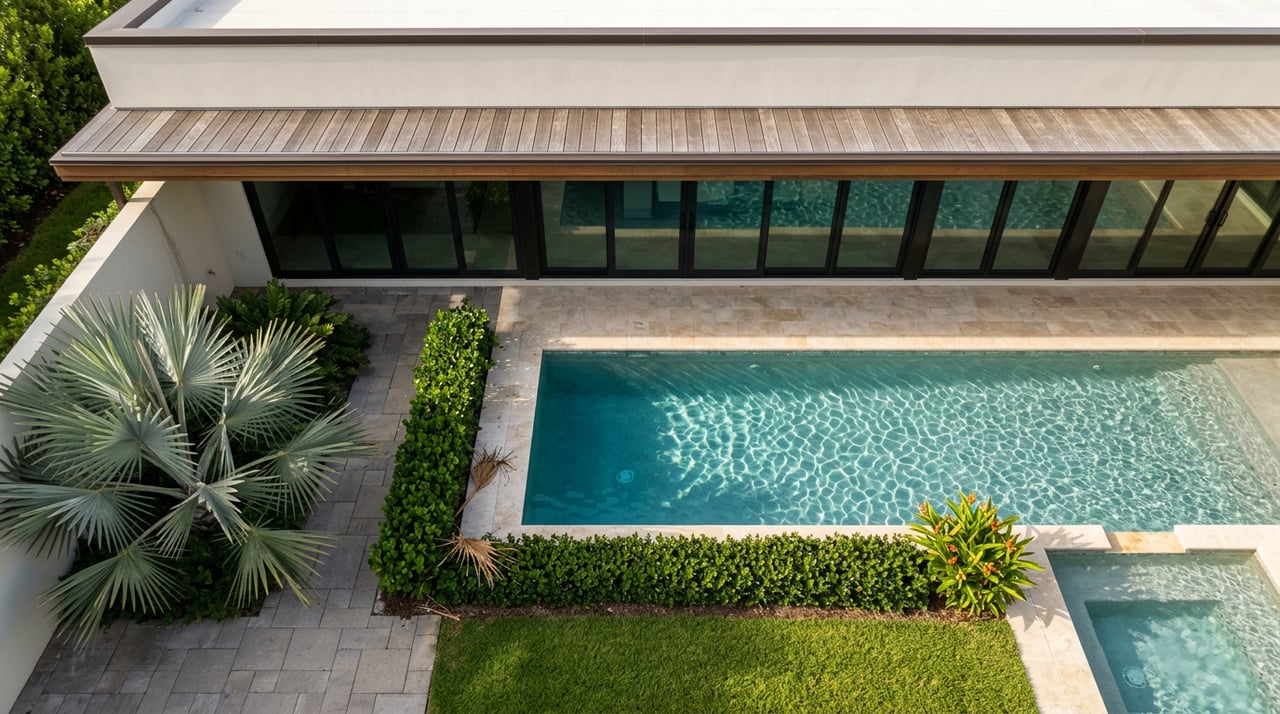
A buyer touring Coral Gables this fall will notice something the listing photos rarely show: on one street, the sky is clean, the trees arch overhead without a wire in sight, and the block feels finished. Two turns later, the poles are still standing, the lines still cross the canopy, and a work crew's orange flags are staked into somebody's swale. Both blocks carry the same city name, the same school zone on paper, and often the same asking price per square foot. They are not, in any meaningful sense, the same market.
That split is not an accident of age or neglect. It is the visible edge of a citywide utility conversion that Florida Power and Light controls on its own schedule, and it sits alongside a second, less visible split in how Coral Gables prices are actually behaving by segment. Anyone comparing this neighborhood to Pinecrest or South Miami on a single median number is comparing an average of several markets that are moving in different directions.
The utility question that belongs in your due diligence
Coral Gables has been undergrounding its power lines since shortly after Hurricane Andrew in 1992, with the effort renewed after Hurricane Irma in 2017. The city's own Public Works updates, revised in December 2025, put roughly 34 percent of the city's electrical infrastructure underground once current construction wraps, with another 4 percent moving from design into construction between 2026 and 2027, and a further 2 percent still in the public outreach phase for 2027 to 2028. That leaves close to 60 percent of the city scheduled for beyond 2028. FPL has said publicly it expects about two-thirds of Coral Gables converted by 2034, with the remaining pockets taking another 15 years after that.
The part buyers miss is who is driving the timeline. The city does not choose which streets go underground next. FPL does, based on which feeder lines and neighborhood laterals have the worst outage history, not on which neighborhoods ask first or pay the most. A block with a rough storm record moves up the list. A block that has been quietly reliable can wait years, regardless of home values or resident preference.
That has a practical consequence for anyone under contract. Feeder-area conversions generally take about a year of engineering and outreach followed by another year of construction, and FPL will need access to easements on private property to finish the job. Buying into a block that just entered the outreach phase means budgeting for a year or two of intermittent construction, easement paperwork, and a temporary tangle of equipment before the neighborhood looks finished. Buying into a block that converted years ago means none of that, and often a visibly different streetscape as a result.
A Coral Gables official described the tradeoff plainly when the program expanded: undergrounding lets residents keep the tree canopy that defines the city while adding storm resilience most homeowners never had before. FPL has said the underground lines improve everyday reliability by about 50 percent and performance during major storms by around 85 percent, which is the kind of number that matters more the longer someone plans to own.
What the median price is actually averaging over
Set the utility question aside and the pricing data tells a similar story about a neighborhood that behaves like several markets stacked together.
Citywide, Coral Gables sale prices were fairly calm over the three months ending in June 2026: a median sale price near $1.7 million, up only about 2.2 percent year over year, but a median price per square foot near $859, up more than 15 percent over the same period. Those two numbers should move together. When they don't, it usually means the mix of what's selling has shifted, smaller or higher-finish homes trading in greater proportion, larger or dated ones sitting.
The gap gets more specific when you look at how the waterfront and inland segments have separated over the past decade. In 2016, Gables Estates traded around $1,185 per square foot, about 2.6 times the price of inland resale east of US1, which sat near $456 per square foot. By 2026, Gables Estates had moved to roughly $3,100 per square foot, still about 3.0 times the inland resale figure, which itself had climbed to around $1,050 per square foot. The multiple widened. Waterfront didn't just keep pace with inland Coral Gables over the decade, it pulled further ahead, which runs against the usual assumption that mature neighborhoods eventually let the cheaper tier catch up.
Cocoplum tells a related but distinct story. Starting from a lower 2016 base near $600 per square foot, it has appreciated roughly 175 percent over the decade, outpacing even Gables Estates on a percentage basis as buyers priced out of the ultra-prime waterfront tier treat it as the next best alternative.
Inland new construction condos posted the weakest gain of any tracked segment, up only about 118 percent over the same ten years. That's the number worth sitting with if you've been told that newer automatically means safer. In Coral Gables, being new hasn't outperformed being well located.
| Segment | 2016 price per sq ft | 2026 price per sq ft | Approx. decade change |
|---|---|---|---|
| Gables Estates (waterfront) | ~$1,185 | ~$3,100 | +162% |
| East-of-US1 inland resale | ~$456 | ~$1,050 | +130% |
| Cocoplum | ~$600 | (re-rated segment) | +175% |
| Inland new construction condos | — | — | +118% (weakest segment) |
Two individual sales from early 2026 show how fast the top of that range can move when a property is priced right. 2500 North Greenway Drive sold for $5.25 million in less than a day on the market. 1212 Sorolla Avenue, on a 22,500-square-foot lot just north of Granada Golf Course, sold in January 2026 for $7.8 million in about a week. Both are evidence that speed in this market has nothing to do with a citywide average and everything to do with a specific street, lot, and price band lining up with what a narrow pool of buyers wants right now.
The same address, several different logics
None of this means Coral Gables is unaffordable or unpredictable. It means the neighborhood rewards buyers who shop by street and segment rather than by name alone.
- The blocks around Granada Golf Course put a buyer close to Miracle Mile without paying the historic-core premium, and tend to trade on walkability more than lot size.
- The streets north of Bird Road, closer to the University of Miami, generally draw buyers prioritizing larger lots and renovation flexibility over turnkey finish.
- Cocoplum functions as its own gated market but pulls comparable buyers who widen their search into the surrounding Gables once they see what's available just outside the gates.
- Older housing stock across much of the inland city means older infrastructure alongside it, so a pre-1980s home's plumbing and roof age deserve the same scrutiny as its finishes.
The through line is that a single asking price, or a single undergrounding percentage, tells you almost nothing about the specific block you're standing on. It tells you where the citywide number lands. It doesn't tell you whether your future home is two years from a finished streetscape or already there, or whether the segment you're buying into has been quietly outperforming or lagging the headline median for a decade.
FAQ
How do I find out where a specific Coral Gables block stands in the undergrounding schedule? The city's Public Works department maintains a map of completed, in-construction, and future phases on its FPL undergrounding page, updated periodically as feeder areas move through design and construction.
Does the city decide which neighborhoods get undergrounded next? No. FPL sets the sequence based on each feeder line's historical outage performance, not on requests from residents or the city itself.
Is the waterfront premium the same everywhere in Coral Gables? No. Gables Estates and Cocoplum have moved differently over the past decade, and inland segments, including new construction, have trailed both. The premium is specific to the tier and the street, not a flat citywide rate.
If you're comparing a specific block in Coral Gables against another neighborhood on your list, or trying to read what a listing's price per square foot actually reflects, that's the kind of block-level read Boschetti Realty Group works through with clients every week. Work With Us.