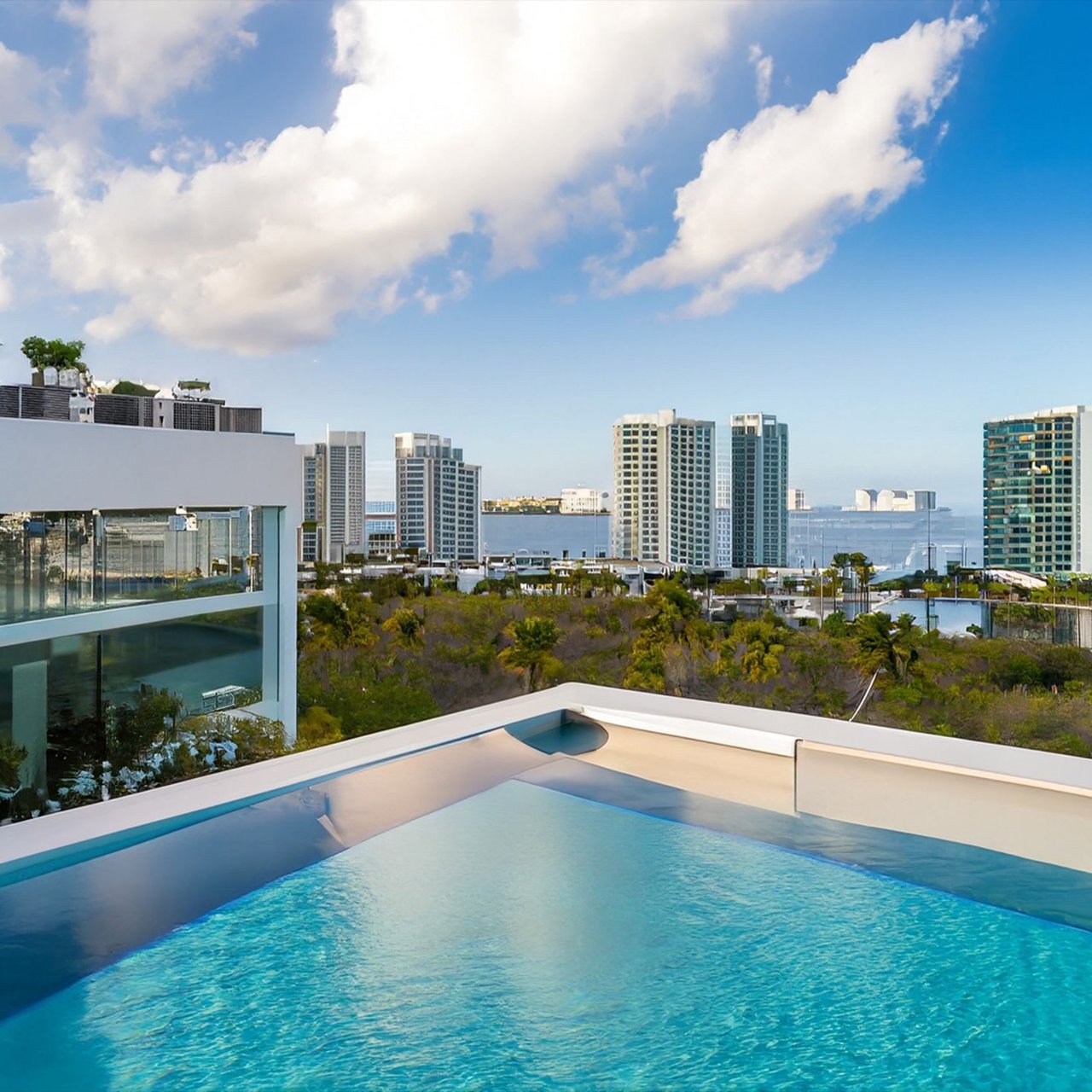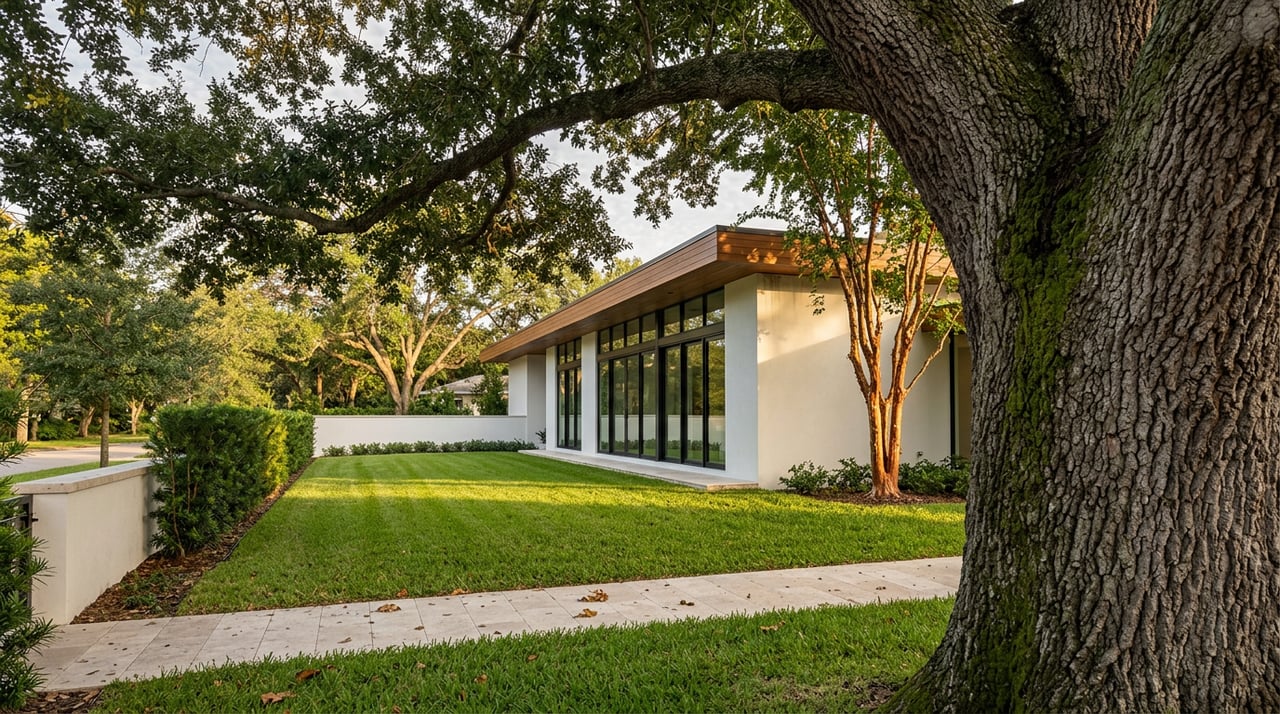
A buyer walks a half-acre lot in Pinecrest with a pool in mind, maybe a kitchen extension, maybe a guest suite over the garage. The mental floor plan comes together fast. What actually decides where any of that can go is not the architect's first sketch. It is the trunk diameter on the live oak near the property line, and whether it measures above or below eighteen inches.
That single number, defined in the Village's own code, is the hinge the rest of the project swings on. Everything downstream, from what the fee schedule charges to how long the file sits on someone's desk, depends on which side of eighteen inches a given tree falls. The Village's flat permit fee looks almost trivial next to the design and timeline consequences that follow once a tree crosses that line, which is the part most renovation budgets in Pinecrest get wrong.
The Number That Decides the Design, Not the Contractor
Pinecrest's tree preservation ordinance treats a specimen tree as any individual trunk measuring over eighteen inches in diameter, measured about four feet above the ground. Below that line, a removal is a routine administrative permit. At or above it, the file routes into the ordinance's specimen tree standards, which require the Village's administrative official to inspect the site and determine whether relocation is feasible before removal is even considered.
Miami-Dade County uses a nearly identical definition at the county level, measuring diameter at breast height 4.5 feet from natural grade, with a short list of exclusions: non-native fruit trees grown for produce like mangoes, avocados, and citrus, and most multi-trunk palms. Those exclusions matter in practice. A grapefruit tree that has shaded a Pinecrest patio for twenty years does not trigger the same review as a mahogany of the same girth, and knowing the difference before a site plan gets drawn saves a redesign later.
The Fee Schedule Only Tells Half the Story
The Village's own permit application spells out the cost of a tree removal or relocation permit: $156 for the first three trees, with a $30 fee added for each additional tree. Pruning inside residential zoning carries no fee at all. Read on its own, that looks like a rounding error in a renovation budget.
The number that actually moves a budget is the replacement requirement, not the permit fee. Under the Village's code, removing a specimen tree requires replacement at a rate of one and a half to two times the caliper removed, and every tree removed, specimen or not, must be replaced with an equal amount at double the canopy credit or double the diameter for specimen-sized trees. That math is why a single mature live oak in the wrong spot can force a redesign rather than a removal.
| Non-specimen tree | Specimen tree | |
|---|---|---|
| Threshold | Under 18 inches DBH | 18 inches DBH or greater |
| Review | Standard permit review | Administrative site inspection, relocation considered first |
| Replacement | Double canopy credit | 1.5x to 2x caliper removed |
| Base fee | $156 for first three trees, $30 each additional | Same fee schedule, heavier mitigation attached |
The design implication is straightforward. An architect who treats a specimen tree as a line item to negotiate away is building in a replacement obligation, a relocation review, and a possible site inspection before the first shovel moves. The ones who plan around the trunk from the start, rather than through it, are the ones whose permits clear without a redesign mid-project.
Why the Climate Around This Got Hotter in 2026
Pinecrest's ordinance has not changed this year. What has changed is the temperature around tree removal across Miami-Dade's canopied municipalities, and that shift matters even in jurisdictions where the code itself is untouched.
On May 14, 2026, Miami's City Commission established a ten-resident Tree Ordinance Advisory Committee, with two seats assigned per commission district. The move followed a campaign by Sierra Club Miami that generated more than 1,200 emails to city officials demanding a moratorium on tree removal permits. Around the same time, a dispute over a 52-foot live oak on Irvington Avenue in the South Grove drew organized neighbor opposition after the homeowner obtained a permit path to clear it for new construction. That case sits in Coconut Grove, under City of Miami jurisdiction, not the Village of Pinecrest, which runs its own building and planning department and its own tree code. But the appetite it reflects, neighbors watching permit files more closely and pushing back harder on specimen removals, does not stop at a municipal boundary.
Pinecrest has spent three decades building a tree canopy it treats as public infrastructure rather than landscaping, and it has held a Tree City USA designation from the Arbor Day Foundation for years running. A Village with that record is not the kind of jurisdiction where a marginal specimen tree case quietly slides through unnoticed, and 2026's regional mood makes that even less likely than it was a few years ago.
Where This Shows Up at the Closing Table, Not Just the Job Site
The friction rarely announces itself during construction. It shows up later, at a sale, a refinance, or an insurance renewal, when a title search or an underwriter's inspection turns up a structure or a tree removal that never got a permit closed out.
Pinecrest's large lots mean a higher volume of pools, pergolas, pool cabanas, and outdoor kitchens per property than in most of Miami-Dade, and a tree removed to make room for one of those structures is exactly the kind of file that gets missed. A landscaping crew clears a tree to open up a pool deck, the homeowner never registers the contractor with the Village, no replacement planting plan gets filed, and the case sits open for years until a buyer's inspection or a listing prep uncovers it.
For a seller, that unresolved file is a closing delay waiting to happen. For a buyer, it is a reason to ask for permit history on any exterior work, not just the structure itself, before finalizing an offer on a property with mature landscaping.
What This Means If You're Building or Buying on a Canopied Lot
A few practical steps change how this plays out for a renovation, a new build, or a sale on a Pinecrest lot with mature trees:
- Order a tree survey before the site plan is finalized, not after. Knowing which trunks measure at or above eighteen inches determines where the house, the pool, and the driveway can go, not the other way around.
- Treat specimen trees, particularly live oaks, gumbo limbos, and mahoganies, as fixed points in the design rather than obstacles to negotiate away. The replacement math makes removal expensive in redesign terms even when the fee itself is modest.
- Know the limits of Florida's hazard exception. State law under Florida Statute 163.045 lets a homeowner remove a tree without a local permit when an ISA-certified arborist documents that it poses an unacceptable safety risk and that removal is the only practical response. It is narrow, it applies to genuine hazards, and it does not authorize removing a healthy specimen tree simply because it sits inside a proposed footprint.
- Before listing a property with pools, pergolas, or outdoor kitchens, confirm those structures and any related tree work were permitted through the Village's Building and Planning Department at 12645 Pinecrest Parkway. Clearing an open file before a buyer's inspection finds it saves time at the closing table.
FAQ
Does every tree in Pinecrest need a permit before it can be removed? Removal or relocation permits are required for trees and palms in the Village, with limited exceptions for certain exempted exotic species that carry no fee but still require Village confirmation.
What makes a tree a "specimen tree" under Pinecrest's code? A trunk measuring over eighteen inches in diameter, measured roughly four feet above the ground, triggers specimen tree status and the additional review that comes with it.
Can I remove a tree myself if I think it's dangerous? Only in narrow circumstances. Florida Statute 163.045 allows removal without a local permit when a certified arborist documents an unacceptable safety risk. It does not cover trees that are simply inconvenient for a floor plan.
Does removing a tree affect my lot coverage or open space calculations? Yes. The Village's landscape standards require site plans to document open space, maximum lawn area, and preserved vegetation together, so a tree removal and its replacement planting are evaluated as part of the same site plan, not as a separate afterthought.
Pinecrest's canopy is one of the reasons buyers choose the Village in the first place, and it is also the reason a renovation budget needs a tree survey before it needs a contractor. If you're weighing a purchase, a rebuild, or a sale on a canopied Pinecrest lot and want a clear read on what the trees on that property actually mean for your plans, Boschetti Realty Group can walk the site with you before the architect locks anything in.